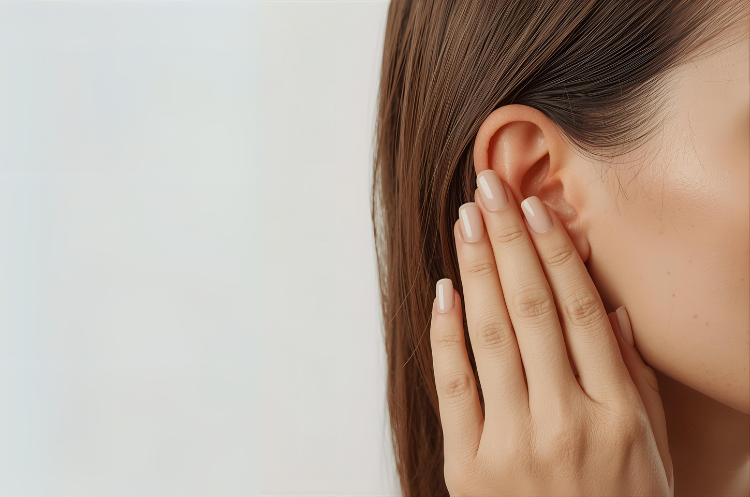
Have your ears suddenly become itchy, dry, blocked or unusually sensitive during perimenopause?
You may have noticed other changes at the same time, such as ringing in your ears, ear pressure, a feeling of fullness, increased sensitivity to sound or occasional ear pain.
Hormonal changes may play a role in some ear and hearing symptoms during the menopause transition, but itchy ears have many possible causes. Understanding what may be related to perimenopause and what needs an ear examination can help you find the right approach.
Can Perimenopause Cause Itchy Ears?
Possibly, but the connection is not as well established as it is for symptoms such as hot flushes, night sweats and menstrual changes.
Oestrogen and progesterone influence many tissues throughout the body, including the skin, nervous system and immune system. Research also suggests that female sex hormones can influence auditory and vestibular function, although exactly how hormonal fluctuations affect individual ear symptoms is still being investigated.
Perimenopause can also coincide with changes in skin dryness and sensitivity. The skin around the ears and the entrance to the ear canal can become irritated by dryness, eczema, hair products, headphones, earrings or repeated cleaning.
So if your ears started itching around the same time as other perimenopause symptoms, hormones may be part of the picture. They are not necessarily the whole explanation.
Why Might Your Ears Itch During Perimenopause?
There are several possible explanations for itchy ears, and more than one can be present at the same time.
Dry or Irritated Ear Canal Skin
The skin lining the outer ear canal is delicate. Scratching, frequent cleaning, cotton buds, earbuds, hearing aids, water exposure and some hair or skincare products can irritate it.
Once the skin barrier is irritated, itching can encourage more scratching, which can create a frustrating cycle of irritation.
Eczema and Other Skin Conditions
Eczema, seborrhoeic dermatitis and psoriasis can affect the outer ear and ear canal. These conditions can cause itching, dryness, scaling, redness or flaking.
If the skin around your ears is persistently dry, flaky or inflamed, it may be worth having it assessed rather than assuming the symptoms are hormonal.
Earwax Build-Up
Earwax is normal and helps protect the ear canal. However, excessive or impacted earwax can cause itching as well as a blocked or full sensation, hearing changes, earache and tinnitus.
This is particularly relevant if your main symptoms are itchy and blocked ears or if you feel as though your hearing has suddenly become muffled.
Otitis Externa
Otitis externa, sometimes called swimmer’s ear, is inflammation of the outer ear canal. It can cause itching, pain, fullness, redness, swelling and sometimes discharge.
Water exposure, trauma from cleaning the ear, earbuds and underlying skin conditions can all increase the risk.
Allergies and Irritants
Seasonal allergies can cause itching around the ears, while products such as shampoo, hair dye, cosmetics and jewellery can irritate the skin.
There is evidence that sex hormones can influence immune and allergic responses, including mast-cell activity. However, this does not mean that an itchy ear is automatically caused by an oestrogen surge or “histamine intolerance.” Research into the relationship between menopause and allergic symptoms is still developing.
Other Ear Symptoms During Perimenopause
Itchy ears aren’t the only ear-related symptoms people may notice during the menopause transition.
Ringing in the Ears and Tinnitus
Tinnitus is the perception of a sound such as ringing, buzzing, humming or hissing when there is no external source producing it.
Some research has identified an association between menopause and tinnitus, and hormonal changes may influence the auditory system. However, tinnitus has many possible causes, including hearing loss, earwax, ear infections, medication, noise exposure and other medical conditions.
This means that new or persistent tinnitus should not automatically be attributed to perimenopause.
Can Perimenopause Cause Hearing Loss?
There is increasing interest in the relationship between menopause and hearing.
A systematic review found that auditory function can fluctuate across the menstrual cycle and that hearing sensitivity declines around menopause, although the exact contribution of oestrogen and progesterone remains unclear.
More recent longitudinal research following women through the menopausal transition found that hearing decline increased with advancing menopausal stages, particularly after the final menstrual period.
That does not mean that every change in hearing during your 40s is caused by perimenopause. Age, noise exposure, ear disease, medications and other health factors can also affect hearing.
Blocked, Clogged or Full Ears
A feeling of pressure or fullness in the ears can have several causes.
These include:
- Earwax build-up
- Eustachian tube dysfunction
- Ear infections
- Sinus or upper respiratory problems
- Changes in middle-ear pressure
- Hearing-related conditions
Perimenopause may coincide with ear symptoms, but persistent ear pressure should be assessed rather than automatically labelled a hormonal symptom.
Hot or Burning Ears
Hot or burning ears can happen for many reasons, including changes in blood flow, temperature, skin irritation, inflammation or flushing.
Because hot flushes and changes in temperature regulation are common during perimenopause, some women may notice flushing or warmth around the ears at the same time.
However, persistent burning, redness, swelling or pain deserves assessment, particularly if it affects one ear.
Ear Pain During Perimenopause
Ear pain is not considered a specific symptom of perimenopause.
Earache can result from infections, inflammation, impacted wax, skin conditions, jaw problems, dental problems or other causes.
If your ear pain persists, becomes severe or occurs with discharge, fever or hearing changes, seek medical advice.
Why Do My Ears Itch More at Night?
Itchy ears at night can be particularly irritating because there are fewer distractions and you’re more likely to notice physical sensations when you’re trying to sleep.
Dry skin, eczema, irritation from headphones or hearing aids, earwax and environmental allergens can all contribute.
Perimenopause may also make nighttime symptoms feel more noticeable because sleep disruption is already common during this stage.
If the itching repeatedly wakes you or you find yourself scratching inside your ears, it’s worth having the ear canal examined.
How to Stop Itchy Ears During Perimenopause
The best approach depends on what is causing the itching.
Stop Putting Cotton Buds Inside Your Ears
This is one of the simplest changes you can make.
Cotton buds can push wax deeper into the ear canal and scratch or damage the delicate skin. Repeated cleaning can therefore make itching and irritation worse.
The ear canal has its own cleaning mechanism, and earwax is protective rather than something that needs to be completely removed.
Avoid putting fingers, cotton buds or other objects inside the ear canal.
Keep Irritated Ears Dry
If your ears are prone to itching or irritation, try to avoid getting excessive water, shampoo or soap into the ear canal.
This is particularly important if you are prone to otitis externa or have an existing ear-canal skin condition.
Consider Whether a Product Is Irritating Your Ears
Think about anything that comes into contact with your ears, including:
- Shampoo and conditioner
- Hair dye
- Skincare products
- Earrings
- Earbuds
- Headphones
- Hearing aids
- Hair products
If the itching began after introducing a new product, stopping it temporarily may help identify whether irritation is contributing.
What About Olive Oil or Vaseline for Itchy Ears?
This is one area where online advice can become confusing.
Olive oil is sometimes recommended for earwax, and some healthcare services advise its use to soften impacted wax. It should not, however, be treated as a universal remedy for itchy ears.
For dry skin around the outside of the ear, a simple emollient may be appropriate. Some clinical ear-care services also advise using petroleum jelly around the ear to help keep water away when bathing or swimming.
Putting products into the ear canal without knowing whether the eardrum is intact or what is causing the symptoms is a different matter.
Treatment warning: Do not put oils, creams, Vaseline or medicated drops into the ear canal unless you have been advised that the product is appropriate for your particular ear problem. Some ear drops are unsuitable when the eardrum is perforated or when certain ear conditions are present. A pharmacist, GP or ear-care professional can advise you on the safest option.
What About Antihistamines for Itchy Ears?
Antihistamines may be useful when itching is part of an allergic condition, but they are not a general treatment for unexplained itchy ears.
If the problem is caused by eczema, earwax, otitis externa or another ear condition, treating the underlying cause is more appropriate.
Some antihistamines can also cause drowsiness or other side effects.
Medication warning: Do not assume that an antihistamine is the right treatment simply because your ears itch. Ask your pharmacist or GP whether it is appropriate for your symptoms, particularly if you take other medications or have other health conditions.
Do Supplements Help With Itchy Ears During Perimenopause?
You may come across recommendations for vitamin C, quercetin, omega-3s, magnesium, vitamin B6, zinc, vitamin D, probiotics or DAO enzymes for “histamine-related” symptoms.
The problem is that there is currently not enough evidence to recommend these supplements specifically for perimenopausal itchy ears.
Some nutrients have important roles in immune function and skin health, and correcting a genuine nutritional deficiency can be beneficial. That is different from taking high-dose supplements to try to control a presumed hormonal or histamine problem.
The same applies to claims that probiotics or DAO enzymes can “clear histamine” and therefore resolve itchy ears. These approaches may be relevant in specific circumstances, but they should not be presented as established treatments for perimenopausal ear symptoms.
Supplementation warning: Supplements can interact with medications and can cause adverse effects at high doses. Vitamin B6 is a particularly important example because excessive or prolonged intake can cause peripheral neuropathy. Speak with your GP, pharmacist or qualified nutrition professional before starting supplements for ear or histamine symptoms.
What About Acupuncture for Perimenopause Ear Symptoms?
Acupuncture is sometimes promoted online using specific “ear points” for perimenopause, tinnitus or hormonal symptoms.
There is not enough evidence to recommend acupuncture as a specific treatment for itchy ears caused by perimenopause. If you are considering acupuncture, it should complement appropriate assessment rather than replace investigation of persistent ear symptoms.
Treatment warning: Acupuncture should be performed by a suitably trained practitioner using appropriate infection-control practices. Persistent ear pain, discharge, hearing loss or tinnitus should be medically assessed rather than treated solely with acupuncture.
When Should You See a Doctor About Itchy Ears?
Itchy ears are often caused by relatively minor problems, but some symptoms need proper assessment.
Make an appointment with your GP or an ear-care professional if you have:
- Persistent or worsening itching
- Ear pain
- Fluid or discharge from the ear
- Bleeding
- Significant redness or swelling
- Recurrent ear infections
- A blocked ear that does not clear
- New hearing changes
- Persistent tinnitus
- Dizziness or vertigo
- Symptoms affecting only one ear
An examination can help distinguish between earwax, eczema, infection, irritation and problems involving the middle or inner ear.
When Are Ear Symptoms an Emergency?
Some ear symptoms should not be put down to perimenopause.
Sudden hearing loss developing over a period of three days or less requires urgent medical assessment. NICE recommends immediate referral so that the person can be assessed within 24 hours.
Seek urgent medical attention if tinnitus occurs with sudden hearing loss, facial weakness or severe vertigo. Pulsatile tinnitus, where the sound beats in time with your pulse, also requires medical assessment.
These symptoms need investigation because treatable ear, neurological or vascular conditions can sometimes be responsible.
The Bottom Line on Itchy Ears and Perimenopause
So, are itchy ears a sign of perimenopause?
They can occur during perimenopause, but itchy ears are not currently considered a classic or well-established symptom of the menopause transition.
Hormonal changes may influence skin, immune and auditory function, and there is growing research into how menopause affects hearing and tinnitus. At the same time, common ear conditions such as eczema, earwax, irritation and otitis externa can explain itchy ears just as easily.
If your itchy ears appeared alongside other perimenopause symptoms, keep track of when they occur and whether anything else seems to trigger them. But if the symptoms persist, become painful or are accompanied by hearing changes, discharge, significant pressure or tinnitus, getting your ears checked is a much better strategy than assuming everything is hormonal.
Perimenopause can explain a lot. It shouldn’t become a catch-all explanation for everything happening above the neck.