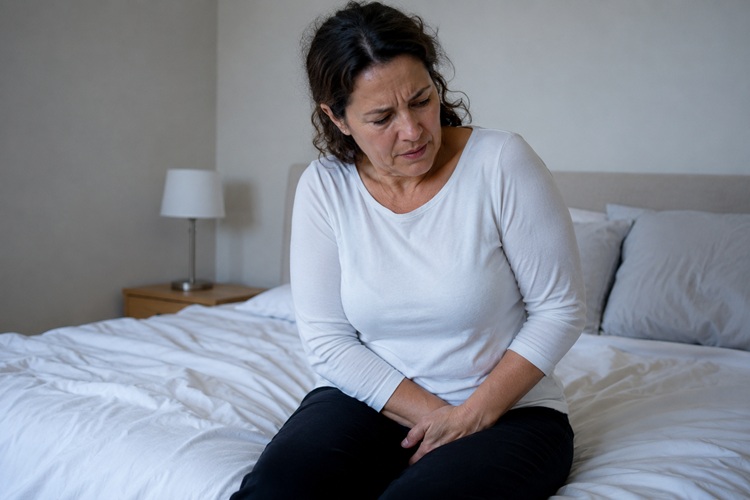
Vaginal itching and perimenopause can occur at the same time, and hormonal changes can contribute to changes in the vulva and vagina. However, an itchy vulva is not always caused by perimenopause. Infections, skin conditions, irritation from personal-care products and other causes can produce very similar symptoms.
Understanding the possible causes can help you work out when simple changes may help and when it is worth seeing a healthcare professional.
Understanding Vaginal Itching During Perimenopause
Perimenopause can affect the vulva and vagina as oestrogen levels fluctuate and, over time, decline. Lower oestrogen can contribute to changes in the vulvovaginal tissues, including increased dryness, irritation, burning and itching.
These changes are part of what is known as genitourinary syndrome of menopause (GSM). Although GSM is more commonly discussed after menopause, some women can develop vulvovaginal symptoms during the perimenopause transition.
At the same time, an itchy vulva during perimenopause can have other causes. Vulval skin is particularly sensitive to friction, moisture, soaps, wipes, sanitary products and other potential irritants. Conditions such as contact dermatitis, thrush, psoriasis, lichen sclerosus and other vulval skin disorders can also cause itching.
Why Perimenopause Can Trigger an Itchy Vulva and Labia
The Role of Hormonal Changes in Vaginal Discomfort
Oestrogen helps maintain the health, elasticity and moisture of vulvovaginal tissues. As oestrogen levels fluctuate during perimenopause and eventually decline, some women experience:
- Increased dryness
- Burning or irritation
- Greater sensitivity of the vulval skin
- Reduced vaginal lubrication
- Discomfort during sex
- Itching around the vulva or vaginal opening
The vaginal and vulval tissues can also become more susceptible to irritation when they are dry or exposed to friction.
Changes in the vaginal environment can also affect susceptibility to some vaginal infections. However, this does not mean that every episode of itching is caused by hormonal changes or an infection.
Dryness, Irritation, and Night-time Symptoms
Dryness can affect both the vagina and the external vulval area. Some women describe their symptoms as a dry, itchy vulva during perimenopause, while others notice more burning, soreness or sensitivity.
Symptoms may include:
- Persistent or recurring itching, including itchy vulva at night
- Dryness or a feeling of tightness
- Burning or irritation
- Redness or soreness
- Increased sensitivity after washing
- Discomfort during or after sex
- Small cracks or fissures in the skin
Night-time itching can also be related to conditions affecting the vulval skin, including dermatitis and lichen sclerosus. Scratching can further irritate the skin and create an itch-scratch cycle.
Recognising Related Symptoms: Vulva, Labia, and Vaginal Itch
When people search for perimenopause itchy labia, itchy labia majora perimenopause, or perimenopause itchy vagina, they may actually be describing itching of different parts of the vulvovaginal area.
The vulva includes the labia, clitoris and vaginal opening. The vagina itself is the internal canal. Identifying where the itching is occurring can help a healthcare professional work out what may be causing it.
Possible symptoms include:
- Dryness or increased sensitivity of the vulval tissue
- Itching affecting the labia majora or labia minora
- Redness, soreness or irritation
- Burning
- Pain or discomfort during sex
- Small cracks or fissures
- Changes in the appearance or texture of the skin
- Itching that extends towards the perineum or around the anus
An itchy vulva and anus during perimenopause should not automatically be attributed to hormones. Lichen sclerosus, dermatitis and other skin conditions can affect the skin around the anus as well as the vulva.
When an Itchy Vulva May Need Investigation
Vulval itching has many possible causes. Some of the more common include:
- Irritant or allergic contact dermatitis
- Thrush
- Dryness associated with lower oestrogen
- Friction, sweating or moisture
- Psoriasis or eczema
- Lichen simplex
- Lichen sclerosus
- Lichen planus
- Less commonly, other vulval conditions that require medical assessment
Lichen sclerosus is particularly important to recognise because it can cause intense itching, soreness, fissures and changes in the appearance of the vulval skin. It can also affect the skin around the anus. Persistent symptoms or noticeable changes in the skin should therefore be assessed rather than repeatedly treated as thrush or assumed to be a perimenopause symptom.
If you notice unusual discharge or odour, significant swelling, sores, bleeding, severe pain, new skin changes, or symptoms that do not settle, speak with your GP or another appropriate healthcare professional.
Is Vaginal Itching a Sign of Perimenopause?
Yes, perimenopause can cause an itchy vulva or vaginal irritation, particularly when changing oestrogen levels contribute to dryness and vulvovaginal tissue changes.
However, an itchy vulva is not specific to perimenopause. This distinction matters because several infections and vulval skin conditions can cause similar symptoms and may require completely different treatment.
If your itching is new, persistent, severe or keeps returning, it is worth having the cause checked rather than assuming it is simply another perimenopause symptom.
Safe Ways to Soothe an Itchy Vulva During Perimenopause
If dryness or irritation is contributing to your symptoms, a few simple changes may help protect the vulval skin:
- Avoid scented products: Skip fragranced washes, wipes, deodorants, bubble baths and other products marketed for intimate hygiene.
- Keep cleansing gentle: For many people, washing the vulva with lukewarm water is sufficient. If you prefer a cleanser, choose a gentle, fragrance-free soap substitute rather than repeatedly washing with conventional soap.
- Avoid over-washing: Frequent washing can further irritate already sensitive skin.
- Reduce friction: Loose-fitting clothing and breathable underwear may be more comfortable, particularly if sweating or chafing makes your symptoms worse.
- Try a bland emollient or barrier: A simple, fragrance-free emollient may help protect irritated external skin.
- Use a cool compress: A clean, cool cloth can provide temporary relief from itching.
- Use lubricant during sex: If dryness or friction contributes to discomfort, a suitable lubricant can reduce friction.
- Avoid scratching where possible: Scratching can damage the skin and perpetuate the itch-scratch cycle.
Treatment note: Persistent vulval itching should be assessed before repeatedly using antifungal, steroid or other medicated creams. Treatment depends on the underlying cause. For symptoms associated with genitourinary syndrome of menopause, vaginal moisturisers and lubricants may help, while prescription treatments such as low-dose vaginal oestrogen may be appropriate for some women. Discuss medication options with your GP or other qualified healthcare professional.
What About Supplements and Gut Health?
It is tempting to look for a supplement that will fix vaginal itching, particularly when the symptoms appear alongside other perimenopause changes.
At present, there is not enough evidence to recommend probiotics, zinc or other nutritional supplements specifically as a treatment for perimenopausal vulval itching. A balanced diet supports general health, but that is different from showing that a particular food or supplement treats an itchy vulva.
If you have a confirmed nutritional deficiency, supplementation may be appropriate for that deficiency. It should not be used as a substitute for investigating persistent vulval symptoms.
Supplement warning: Do not start zinc, probiotics or other supplements specifically to treat vaginal or vulval itching without discussing them with your GP or an appropriately qualified healthcare professional. Supplements can interact with medications, and excessive zinc intake can itself cause health problems.
When Should You See a Doctor About an Itchy Vulva?
Make an appointment if your symptoms:
- Persist or keep coming back
- Are severe enough to interfere with sleep or daily life
- Are accompanied by unusual discharge or odour
- Cause significant burning or pain
- Cause cracks, sores or bleeding
- Are associated with noticeable changes in the colour, texture or appearance of the vulval skin
- Affect the vulva and the area around the anus
- Do not improve after removing possible irritants
A healthcare professional may examine the vulval skin and, depending on your symptoms, perform tests or swabs to check for infection. Skin conditions sometimes need specific treatment, so getting the diagnosis right matters.
Final Thoughts
An itchy vulva during perimenopause can be related to hormonal changes, particularly when lower oestrogen contributes to dryness and irritation. But there are plenty of other possible causes, from contact dermatitis and thrush to conditions such as lichen sclerosus.
If the itching is persistent, recurrent or accompanied by changes to the skin, discharge, pain or bleeding, get it checked. Finding the cause is the first step towards choosing the right treatment.