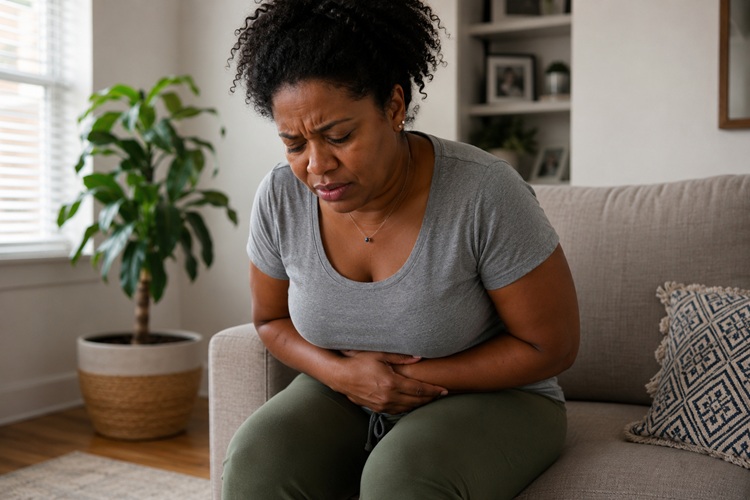
Changes in digestion, including constipation, can happen during the perimenopause years. Hormonal fluctuations may influence gut function, but they are only one piece of the picture. Changes in activity, diet, fluid intake, sleep, stress and medications can also affect bowel regularity.
Understanding what may be contributing to constipation can help you find an approach that works for your body.
Understanding the Link Between Constipation and Perimenopause
Oestrogen and progesterone receptors are found throughout the gastrointestinal tract, and sex hormones can influence gut motility and other aspects of digestive function. Hormonal fluctuations during perimenopause may therefore contribute to changes in bowel habits for some women.
However, the relationship is complex. Constipation is common in the general population, and there is not enough evidence to say that perimenopause itself directly causes constipation.
Other changes occurring during midlife may be just as relevant, including lower physical activity, changes in eating patterns, disrupted sleep, stress and medications.
Why Does Perimenopause Cause Constipation?
Hormonal Shifts and Digestive Changes
Oestrogen and progesterone can affect gastrointestinal motility, sensitivity and the movement of food through the digestive tract.
During perimenopause, hormone levels fluctuate rather than simply declining in a predictable pattern. These changes may coincide with alterations in bowel habits, including constipation, bloating or changes in stool consistency.
It is important not to assume that a particular hormone level is responsible for constipation, though. Research into sex hormones and gastrointestinal function is still developing, and bowel symptoms can have many causes.
Other Contributing Factors in Midlife
Several factors can contribute to constipation during the perimenopause years:
- Reduced physical activity
- Changes in dietary fibre intake
- Not drinking enough fluid
- Changes in meal timing or eating patterns
- Stress and disrupted sleep
- Ignoring the urge to have a bowel movement
- Certain medications, including iron supplements, some antidepressants, opioid pain medicines and some antacids
- Medical conditions affecting the thyroid, pelvic floor or gastrointestinal tract
Age may also play a role. Constipation becomes more common as people get older, so changes in bowel habits during midlife cannot necessarily be attributed to perimenopause.
The gut microbiome is another area of active research. Hormonal changes, diet, age and other factors can influence the microbiome, but we do not yet have enough evidence to say that a specific microbiome change causes constipation during perimenopause.
Recognising Constipation as a Perimenopausal Symptom
Constipation is generally characterised by one or more of the following:
- Fewer than three spontaneous bowel movements per week
- Hard or lumpy stools
- Straining to pass stools
- A feeling of incomplete emptying
- A sensation that something is blocking the passage of stool
- Needing to use manual manoeuvres to help empty the bowel
Bloating and abdominal discomfort can occur alongside constipation, although they are not specific to it.
If constipation is a new change that happens alongside other perimenopausal symptoms, it is reasonable to consider hormonal changes as one possible contributor. It is still worth looking at the other factors that may have changed at the same time.
Is Constipation a Common Sign of Perimenopause?
Constipation is reported by some women during the menopause transition, and hormonal changes may influence gastrointestinal symptoms.
However, constipation is not considered one of the defining symptoms of perimenopause. Digestive symptoms such as bloating, abdominal discomfort, constipation and diarrhoea are common, but research has not established a simple cause-and-effect relationship between perimenopause and constipation.
This distinction matters because persistent constipation should not automatically be dismissed as “just hormones.”
Practical Strategies for Relieving Constipation
There is no single solution that works for everyone. A combination of dietary, behavioural and lifestyle changes can often improve bowel regularity.
Nutrition, Hydration and Lifestyle Adjustments
1. Increase fibre gradually
A varied diet containing fibre from foods such as oats, whole grains, legumes, vegetables, fruit, nuts and seeds can help increase stool bulk and support regular bowel movements.
If your current fibre intake is low, increase it gradually. A sudden large increase can make bloating and gas worse.
Some people find that foods such as kiwifruit, prunes, pears or ground linseeds are particularly helpful for constipation.
2. Drink enough fluid
Adequate fluid intake helps keep stools softer, particularly when increasing dietary fibre.
There is no universal number of glasses that everyone needs. Fluid requirements vary according to body size, activity, climate, diet and other factors. A simple starting point is to drink regularly throughout the day and pay attention to thirst and urine colour.
3. Move regularly
Regular physical activity may help support bowel function. Walking, resistance training, cycling and other forms of movement can all be useful.
You do not need an elaborate “gut health” exercise routine. Consistent movement is the important part.
4. Pay attention to your bathroom routine
Try not to routinely ignore the urge to have a bowel movement.
Some people find it helpful to sit on the toilet for a few minutes after breakfast or another meal, when the gastrocolic reflex can naturally stimulate bowel activity.
A small footstool can also help position the knees above the hips, which may make passing stool easier.
5. Consider your stress and sleep
The gut and nervous system communicate continuously, and stress can influence gastrointestinal function. Poor sleep can also affect digestive symptoms and overall wellbeing.
Relaxation techniques, regular sleep and activities that help reduce stress may therefore be useful parts of a constipation-management plan.
6. Consider fermented and prebiotic foods
Foods such as yoghurt, kefir, legumes, whole grains, onions, garlic, asparagus, fruit and vegetables provide different types of fibre and fermentable carbohydrates that can support the gut microbiome.
However, more is not always better. If you are prone to bloating or have a sensitive gut, increasing these foods too quickly may make symptoms worse.
What About Probiotics and Magnesium?
Probiotics have been studied for constipation, and some specific strains may improve stool frequency or consistency in certain people. However, probiotic effects are strain-specific, so it is not accurate to assume that every probiotic supplement will help.
Magnesium can also have a laxative effect, which is why some forms are used in constipation management. The appropriate type and dose depend on the individual, and magnesium supplements are not suitable for everyone.
Treatment and supplement warning: Magnesium, probiotic supplements and fibre supplements can cause side effects or interact with medications. Some people should avoid or use magnesium with particular caution, including people with certain kidney problems. If constipation is persistent or severe, speak with your GP or pharmacist before using laxatives or supplements regularly.
When Should You See Your Doctor?
Occasional constipation is usually manageable, but persistent or new constipation deserves attention.
See your doctor if:
- Constipation is persistent or keeps returning
- Your bowel habits change suddenly without an obvious reason
- You have blood in your stool or rectal bleeding
- You have unexplained weight loss
- You have persistent or severe abdominal pain
- You have vomiting or significant abdominal swelling
- You develop iron-deficiency anaemia
- You have a family history of bowel cancer or inflammatory bowel disease
- You are unable to pass stool or gas
These symptoms do not necessarily mean something serious is happening, but they should be assessed rather than attributed automatically to perimenopause.
Final Thoughts
Constipation can occur during the perimenopause years, but hormones are only one possible piece of the puzzle. Changes in fibre and fluid intake, movement, sleep, stress, medications and other health factors can all affect bowel regularity.
Start by looking at what has changed in your own routine. Gradually increasing fibre, drinking enough fluid, moving regularly and giving yourself time to use the bathroom can make a meaningful difference.
If constipation is persistent, severe or accompanied by other concerning symptoms, get it checked rather than assuming it is simply another perimenopause symptom.